Chemistry, the study of matter and its interactions, is deeply rooted in the understanding of periodic trends. These trends, which are observable patterns in the properties of elements across the periodic table, are crucial for predicting how elements behave under different conditions. One of the foundational aspects of periodic trends is the size of atoms, which influences a wide range of chemical properties and behaviors. The concept of atomic size, or atomic radius, is fundamental in understanding why certain elements form specific types of bonds and how they interact with other elements.
The periodic table, a tabular arrangement of the known chemical elements, organized by their atomic number (number of protons in the nucleus), electron configuration, and recurring chemical properties, is a powerful tool for observing these trends. The size of an atom, typically measured as the atomic radius, is one of the key properties that exhibit periodic trends. As one moves across a period (from left to right) in the periodic table, the atomic radius generally decreases due to the increasing effective nuclear charge. Conversely, as one moves down a group (from top to bottom), the atomic radius increases due to the addition of new energy levels.
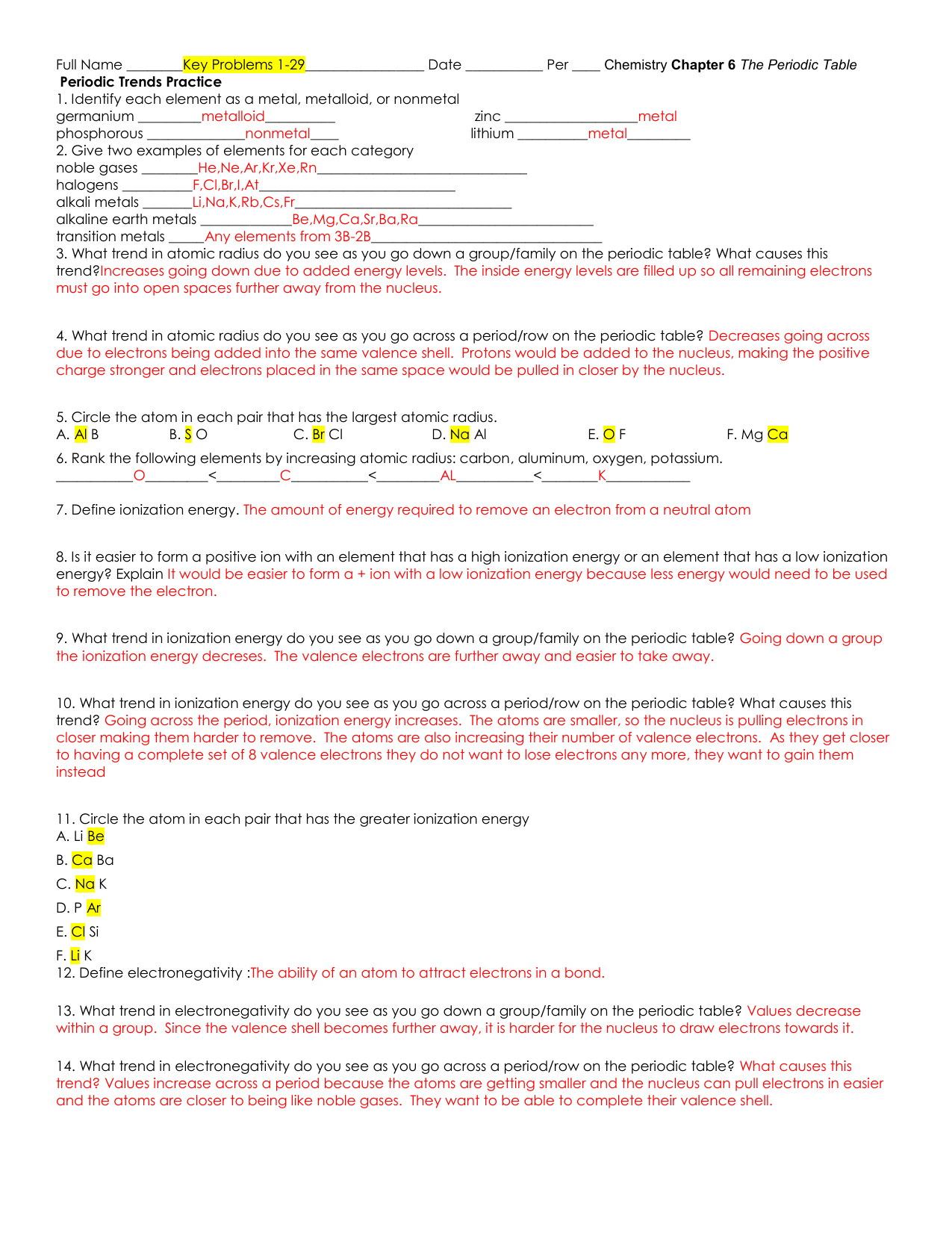
Periodic Trends Chemistry Worksheet Atomic Radius More
Understanding Atomic Radius
Understanding atomic radius is pivotal because it directly influences other chemical properties such as electronegativity, ionization energy, and electron affinity. The atomic radius is determined by the distance from the nucleus to the outermost electron in a neutral atom. In ionic compounds, it refers to the distance from the nucleus to the electron in the outermost shell of an ion. The variations in atomic radius across the periodic table help explain why some elements are more reactive than others and why certain compounds have specific geometries.
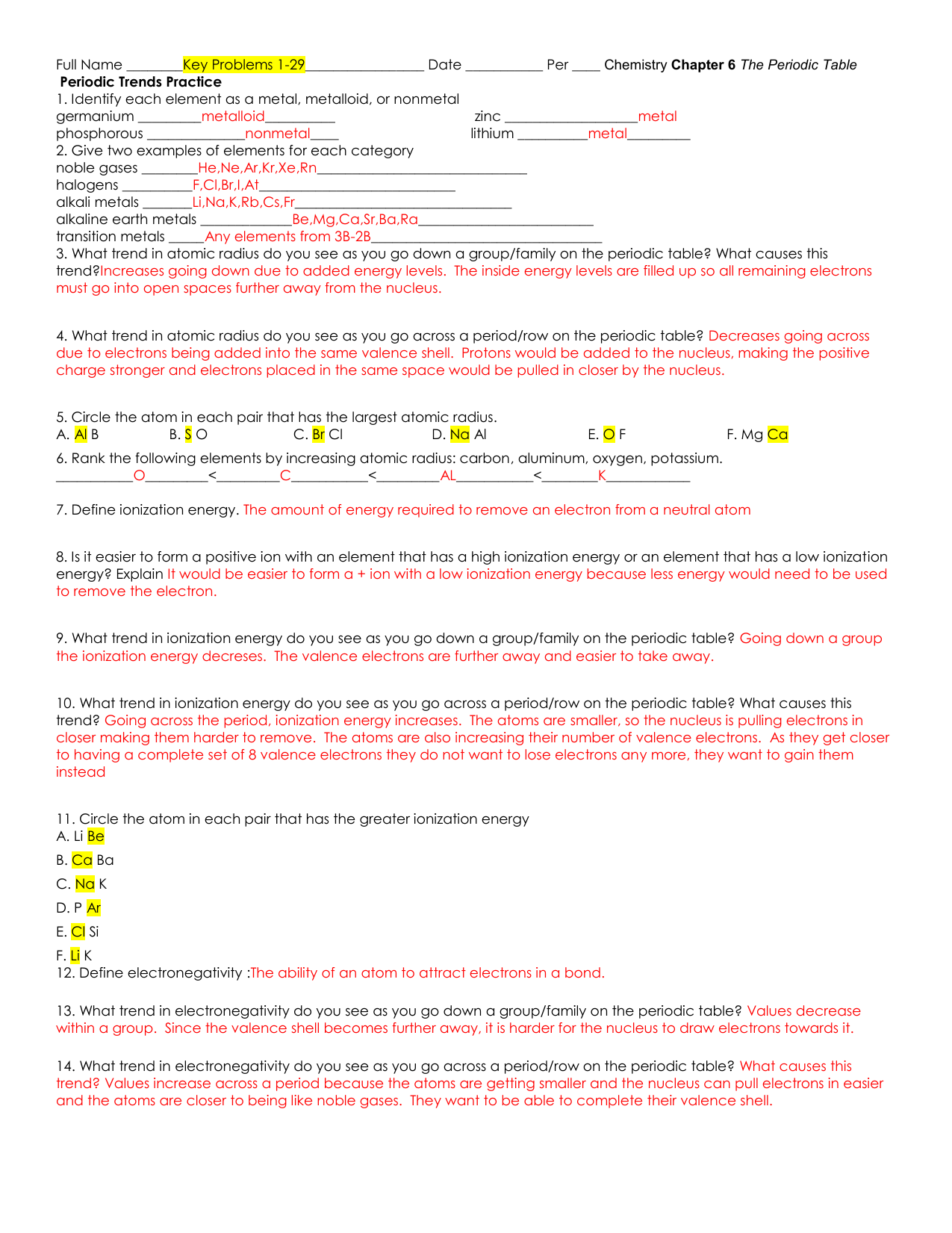
Periodic Trends Chemistry Worksheet Atomic Radius More
Periodic Trends in Atomic Size
Periodic trends in atomic size are systematic and can be predicted based on an element’s position in the periodic table. Moving from left to right across a period, the atomic radius decreases because each successive element has one more proton and one more electron, with the electron being added to the same outer shell. This results in a stronger nuclear pull on the electrons, reducing the atomic radius. In contrast, moving down a group, the atomic radius increases because new energy levels are added, increasing the distance between the nucleus and the outermost electrons.
Applying Periodic Trends to Chemistry Worksheet
Applying periodic trends to a chemistry worksheet, particularly one focused on size like Chemistry Worksheet: Periodic Trends Part I, involves using these patterns to predict and explain various chemical phenomena. For instance, understanding that as you go down a group, the atomic radius increases, can help in predicting the reactivity of elements and the types of compounds they can form. This knowledge is essential for solving problems related to chemical bonding, reactivity, and the physical properties of elements and their compounds.
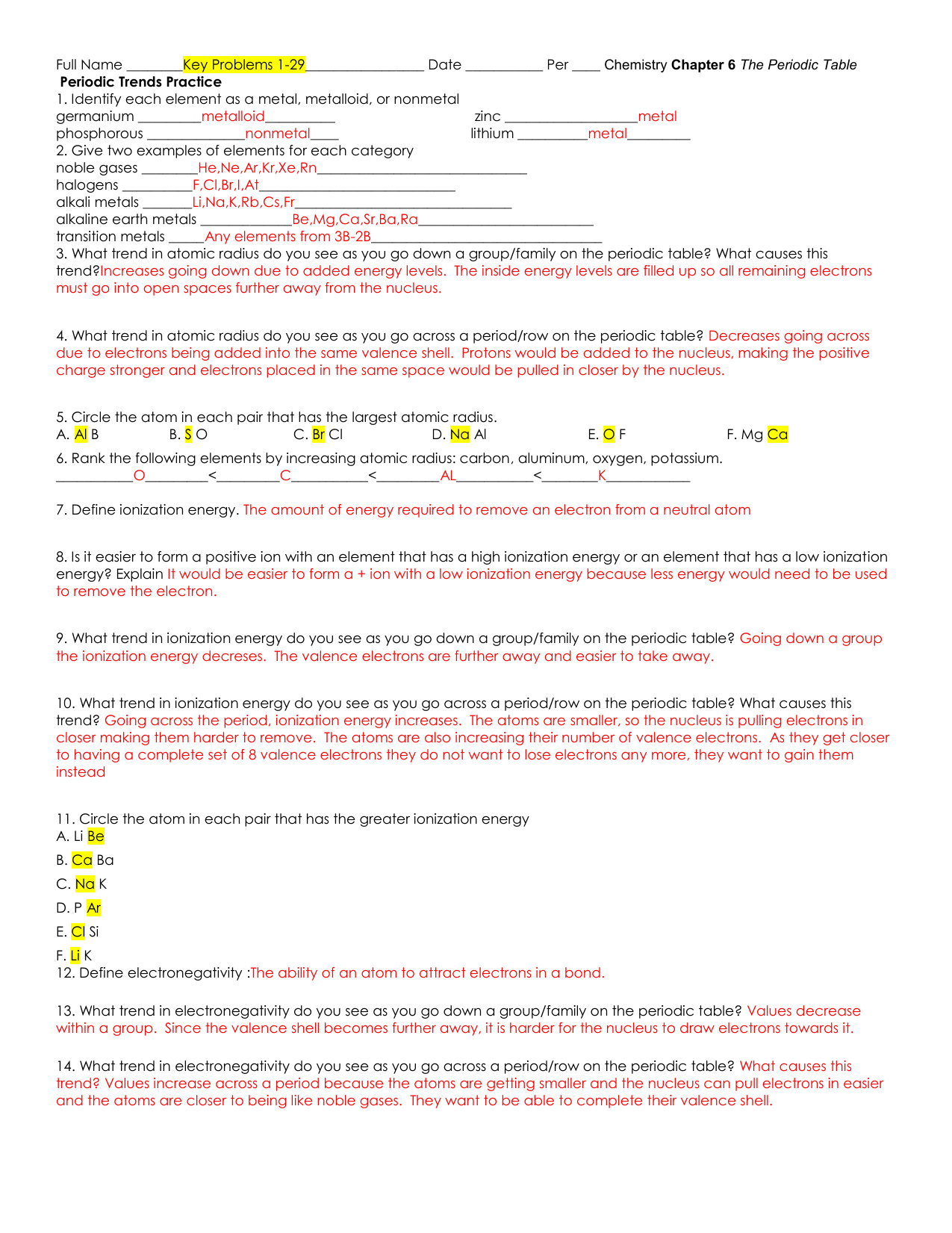
Periodic Trends Chemistry Worksheet Atomic Radius More
In conclusion, mastering periodic trends, especially those related to atomic size, is crucial for a deep understanding of chemistry. Chemistry Worksheet: Periodic Trends Part I provides a comprehensive platform to explore and apply this knowledge, enabling students to predict atomic radius and understand its implications on chemical properties and behaviors. By grasping these concepts, learners can better appreciate the systematic nature of chemistry and improve their ability to solve complex chemical problems.
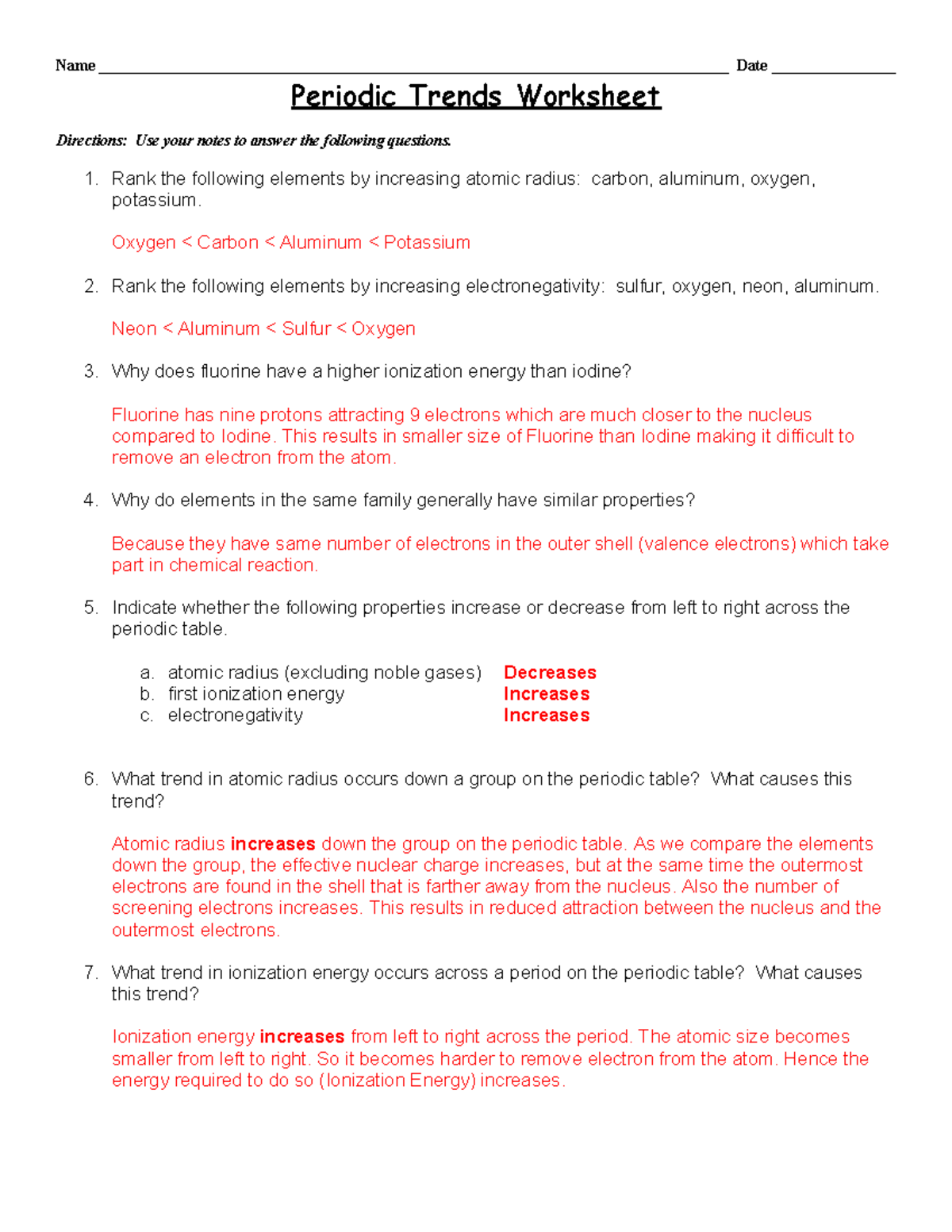
Periodic Trends Worksheet Answer Key 2 Chemistry Class Studocu
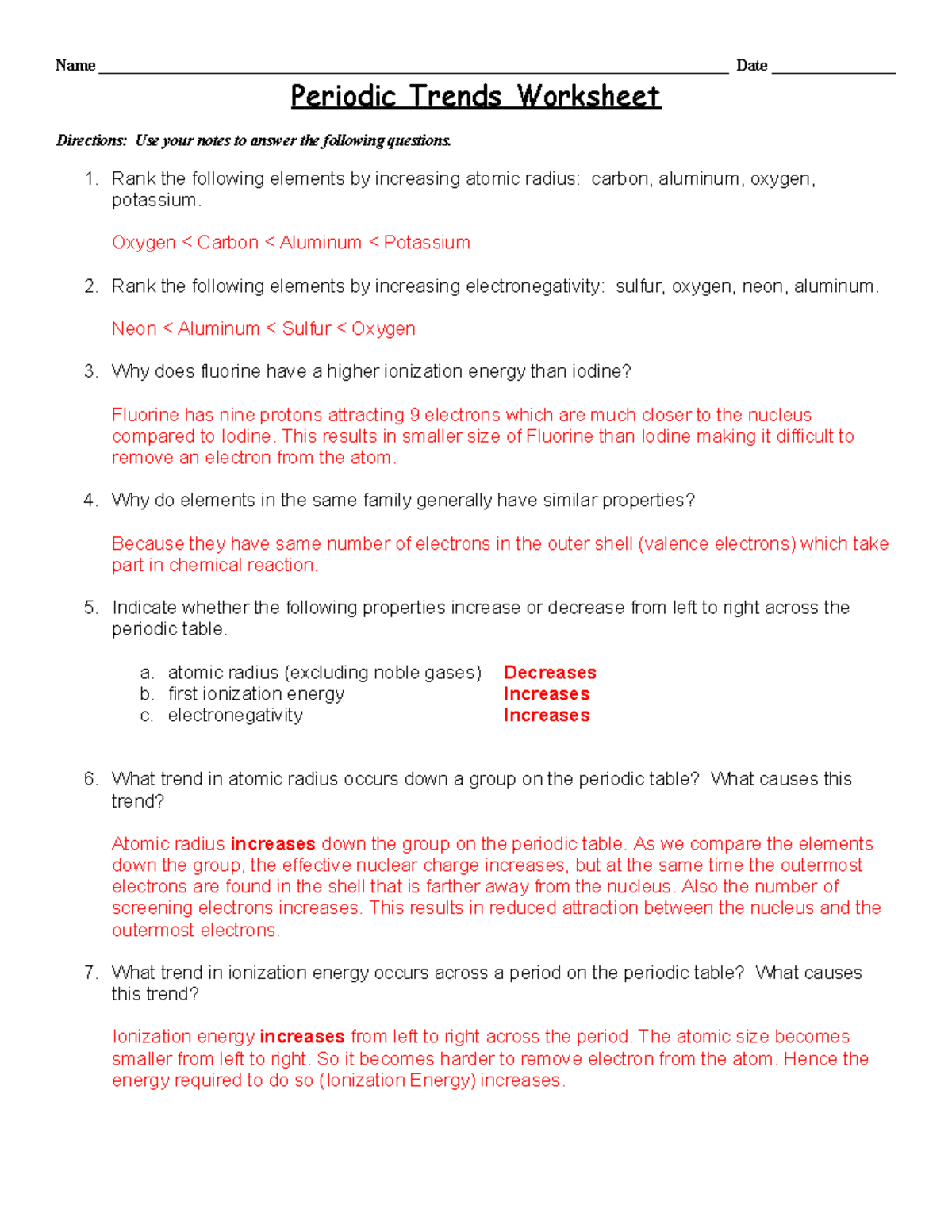
Periodic Trends Worksheet Answer Key 2 Chemistry Class Studocu